Daily Routines
A Gadget Interrupts. A Ritual Repeats.
A gadget asks for your attention. A ritual gives some back. The difference shows up on the twentieth day, not the first.
You know the drawer. Somewhere in it is a device that was exciting for a week. It needed charging, it needed an app, it needed you to remember it existed. It is in the drawer because it asked for more attention than it ever gave back.
The objects that stay out of the drawer share a quality that is almost impossible to photograph. They fold into something you were going to do anyway.
The difference is repetition
Gadgets are designed for the first day. The unboxing, the demonstration, the reason to buy. Rituals are designed for the twentieth, when the novelty has gone and all that is left is whatever small thing the object actually saves you.
The test is simple enough to apply in a shop. Does this remove a decision, or add one? Anything that adds a decision is competing for your attention, and attention is the one budget nobody has spare.
The bottle that answers before you ask
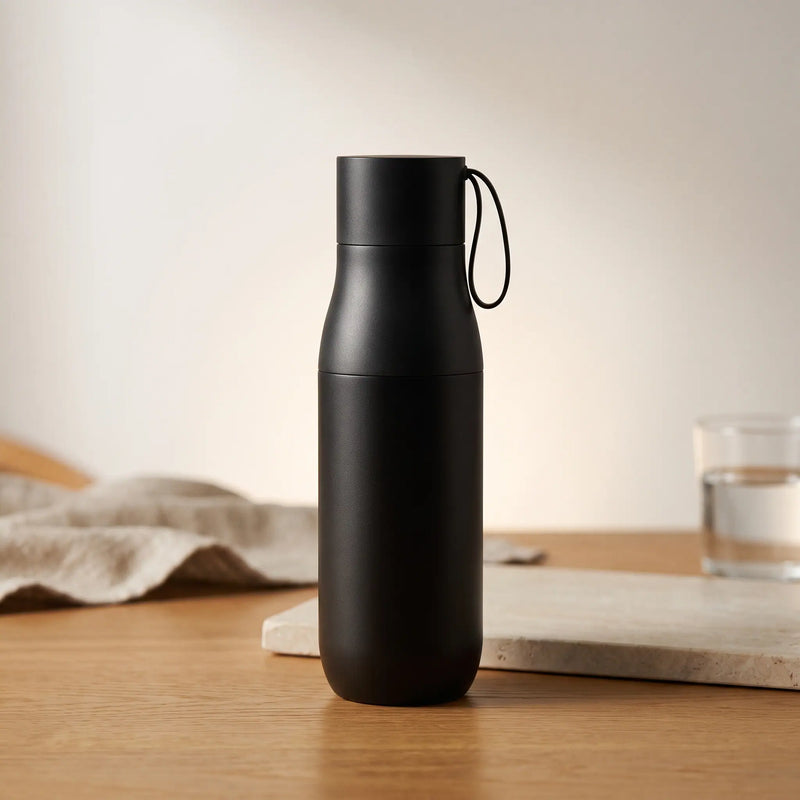
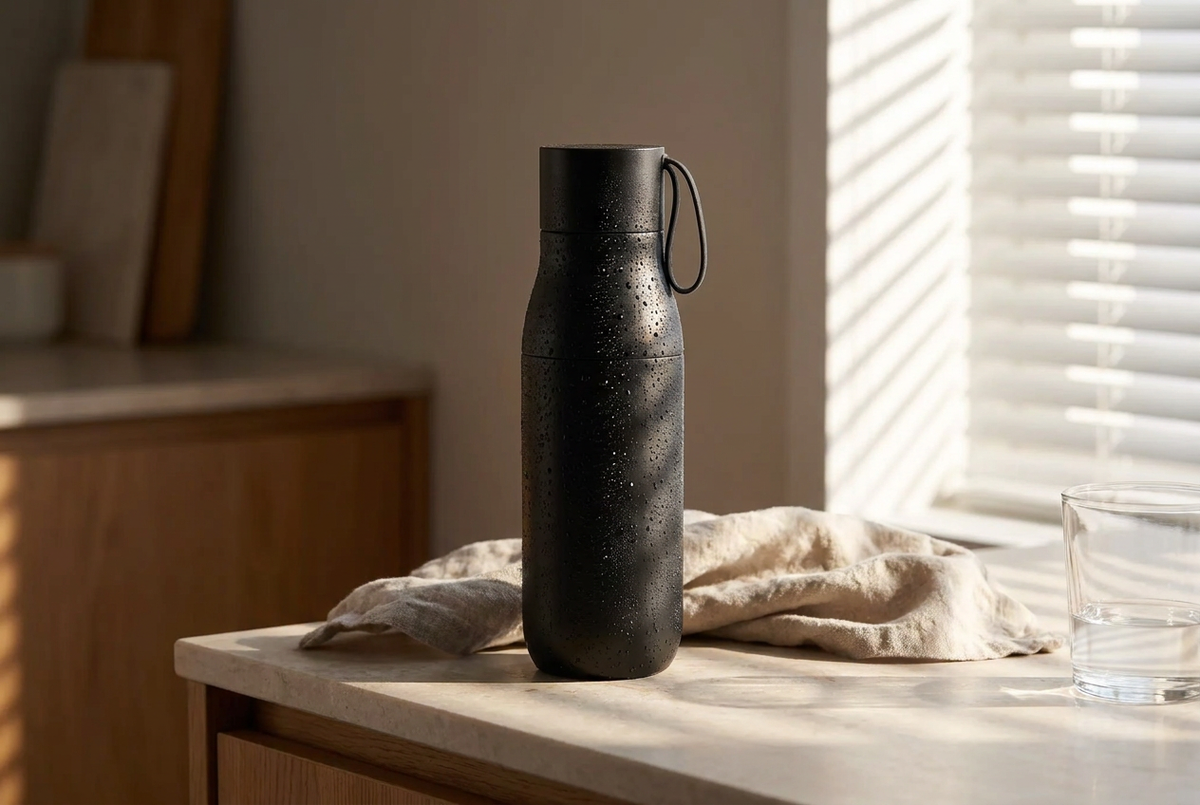
Our smart water bottle is 15.2 fl oz (450 ml) of double-walled stainless steel — 316 on the inside, 304 on the shell — with a small display set into the lid.
What the display removes is a micro decision you make several times a day without noticing. Is this still too hot. Is it still cold. Is there any point in a sip right now. You touch the lid, a number appears, you drink or you wait. It sounds like nothing. Nothing, repeated eight times a day, is precisely where routines live.
There is a reminder function too, and a water clarity check, and both are the sort of feature a spec sheet enjoys. Neither is the reason the bottle works. It works because the answer arrives before the question has finished forming.
Design for the twentieth time
Here is the test we run on everything before it goes on the shelf. It is worth running on anything you are about to buy.
Picture the twentieth use, not the first. Where does the object live when it is not in your hand? Does it need a cable you do not already own? How does it behave when you are late? What does it ask of you at the sink?
That last one matters more than people expect. Our bottle asks to be washed by hand, because there is electronics in the lid. That is a real cost and it belongs in the decision, not in the small print.
Anything you own that is currently in a drawer failed one of those four questions. It is usually worth working out which one, because you will otherwise buy the same mistake in a different color.
How to build a ritual around one object
Put it where the routine starts. Not where it looks tidiest. A water bottle belongs where you first stand in the morning, not in a cupboard with the mugs.
One object per moment. Rituals collapse under choice. Two bottles is not twice the hydration, it is a decision at seven in the morning.
Let it be visible. Things you can see get used. It is also why we care what an object looks like sitting on a counter, and not only how it looks in a product photograph.
Not gadgets. Days.
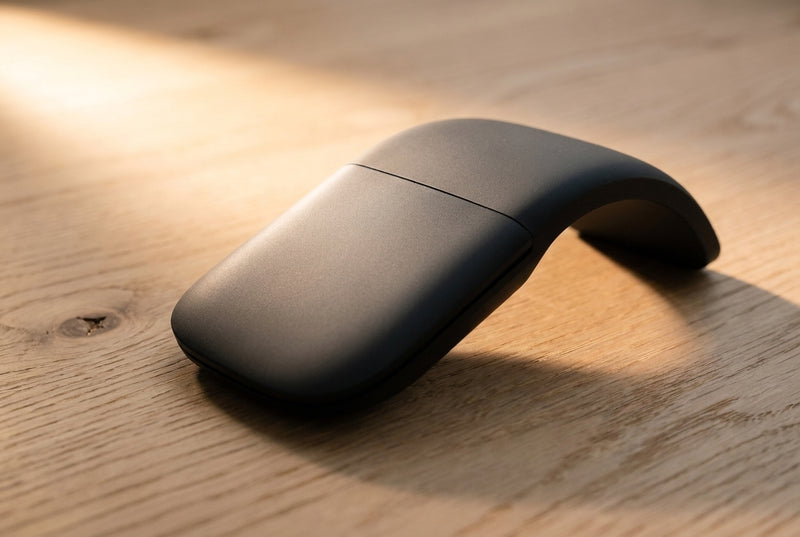
We are not really in the business of selling technology. We are in the business of a slightly better Tuesday: water you actually drink, a desk that does not tangle, a bag carrying one thing fewer.
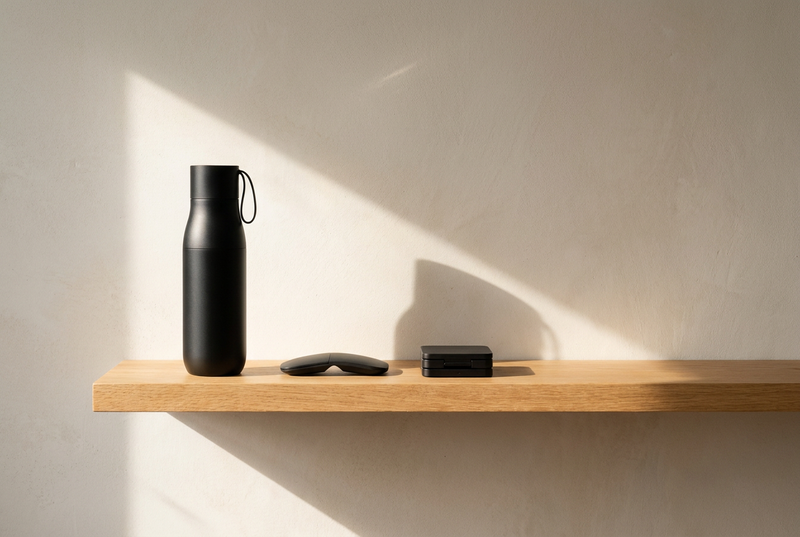
Every object on this shelf was chosen slowly. Each one has to earn its place on the twentieth day, not the first.